
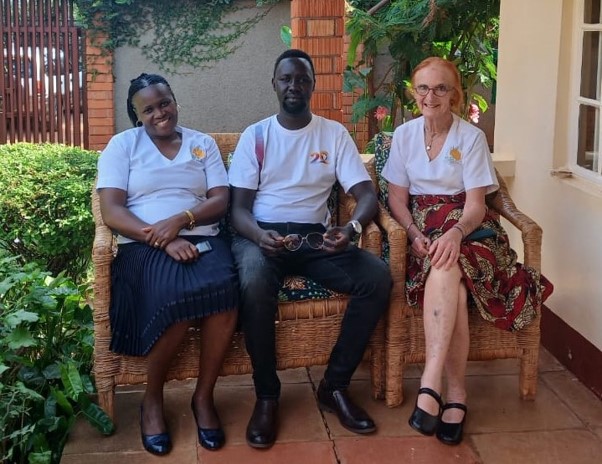
Inside Rays of Hope Hospice Jinja, the day moves quickly. Mobile phones vibrate across desks. Landlines cut through conversations already in progress. People pass through rooms carrying files, and medicines.
Outside, field Hilux trucks idle in the compound, ready for the day’s journeys. Some still carry red dust from previous trips, settled into door edges and side mirrors. Others have already left.
Movement is constant. Someone is always waiting for something to be confirmed, or checked, or explained again.
Under a canvas shelter in the compound, patients sit with caregivers beside them. Some have come from far. Some have come because staying home became harder.
Sylvia, the executive director, sits at her desk. The phone is constantly ringing. Each attempt at conversation is interrupted by another call. A patient’s pain has worsened. A family is requesting a home visit. A health worker is asking again about dosage and timing.
She listens, responds, moves to the next call. Watching her, you begin to notice how a single day can stretch itself across so many urgencies.
At one point she looks up and says, this is a normal day. The certainty holds only briefly. Or perhaps it holds because there is no alternative way to describe it.
The road out
Ten minutes later, I am in one of the vehicles.
Ouma is driving. He speaks little. The road demands attention. Joan sits beside him, reviewing patient notes, opening her medical bag, then closing it again.
We leave Jinja slowly. The city loosens its grip. For a moment, life appears ordinary.
Then the shift comes.
Tarmac narrows. Noise falls away. The road turns to red earth, and dust rises behind us.
And so the journey continues toward Sophia.
The house is quiet before we enter. Not silence exactly, but a held stillness that seems to settle into the walls.
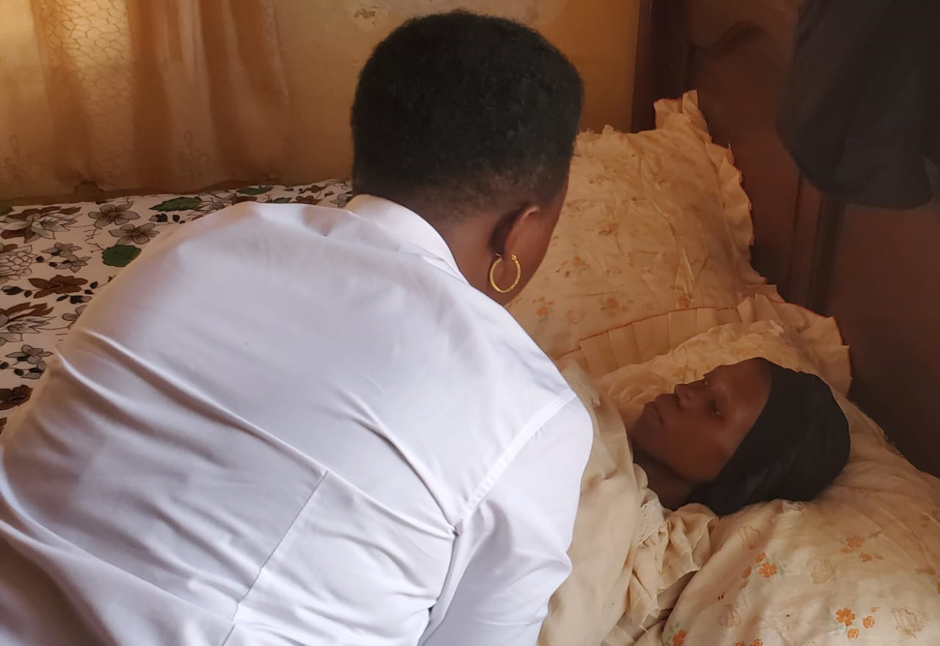
Inside, one room carries everything.
Two beds. A small shelf. A plastic chair.
That is all.
Sophia lies on one bed. Her mother seats on the other. No one explains this arrangement. It simply exists, shaped by necessity.
I take a chair. Joan sits beside Sophia. No one rushes the moment. For a short while, time loosens its grip.
Sophia has colon cancer.
Before this illness, life was already narrow. School ended early. Options reduced long before diagnosis. When illness arrived, it did not begin hardship. It revealed what was already there.
Her daughter, not yet five, appears in the doorway. She steps in, steps out, returns again.
At one point she stands beside her mother’s bed and presses her palm into the mattress. Then she runs outside laughing. No one calls her back.
Joan begins her assessment. Pain. Sleep. Appetite. Days since last visit.
Sophia answers slowly. Her mother fills in the gaps when words do not come easily.
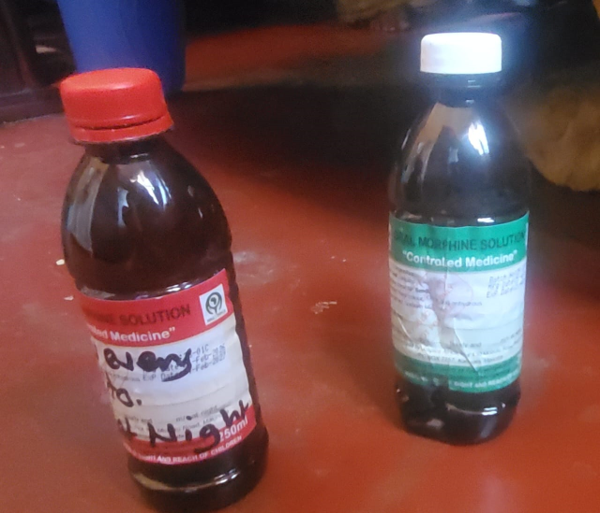
On a small shelf sits a bottle of oral morphine. Joan lifts it, turns it once in her hand, then asks a brief question about how it has been used since the last visit and what the pain has been like in the days between.
She pauses, listens, then reaches into her bag and places a different preparation on the table, adjusting what will be used going forward.
No explanation is offered beyond what is asked and answered in the room.
The road continues
We return to the vehicle.
Joan writes notes. Ouma drives. I watch the road unspool ahead of us.
The first house sits near the lake. The old man is already by the window, where he is usually found. The water is visible from where he sits. He spent most of his life fishing it. Now he watches it.
Joan asks how he has been.
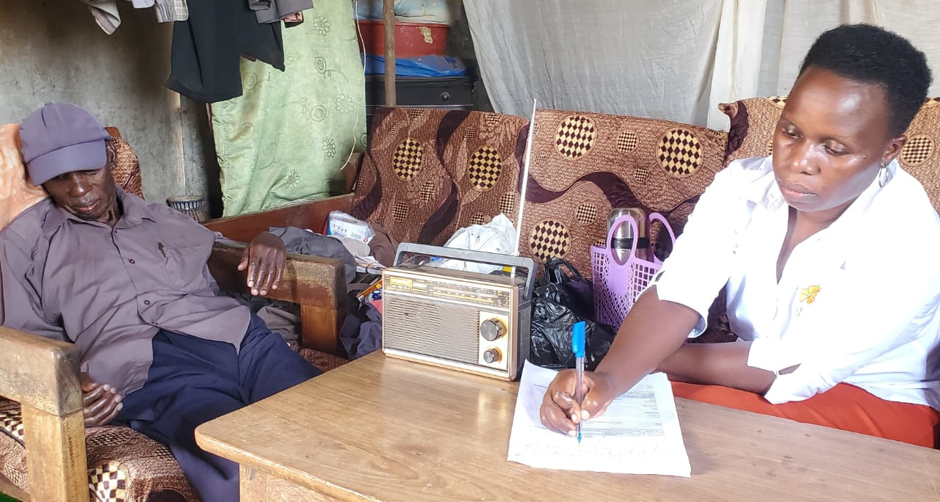
He nods, reaches for a radio, lowers the volume.
“The pain comes and goes,” he says.
Then he looks back toward the lake.
“My children come when they can.”
He is quiet for a moment.
“Such is life.”
The words do not invite response. They settle in and remain there.
In the next home, a man in his thirties sits on a veranda. Before illness, he drove trucks across the country. His life revolved around movement in distant places. Now it moves within a few steps of the same space.
Joan asks about pain. He answers, but it becomes clear quickly that pain is only part of what he is carrying.
“What troubles me most,” he says, “is seeing my mother doing everything for me.”
His mother laughs from across the veranda.
“He calls it babysitting.”
We all laugh with her.
She has stepped away from her business to care for him. He notices every detail. Every cup of water placed beside him. Every task completed before he asks. The life he once controlled through movement has become a life of dependence, and that weighs on him.
The third visit begins differently.
The woman greets us with a smile. Treatment has changed her appearance, but she does not dwell on it. At one point she touches her thinning hair and laughs.
“Maybe I should just shave it all off. What do you think?”
No one answers immediately. The question sits somewhere between humor and decision.
Joan responds.
“It depends on how you feel. I will support whatever makes you most comfortable.”
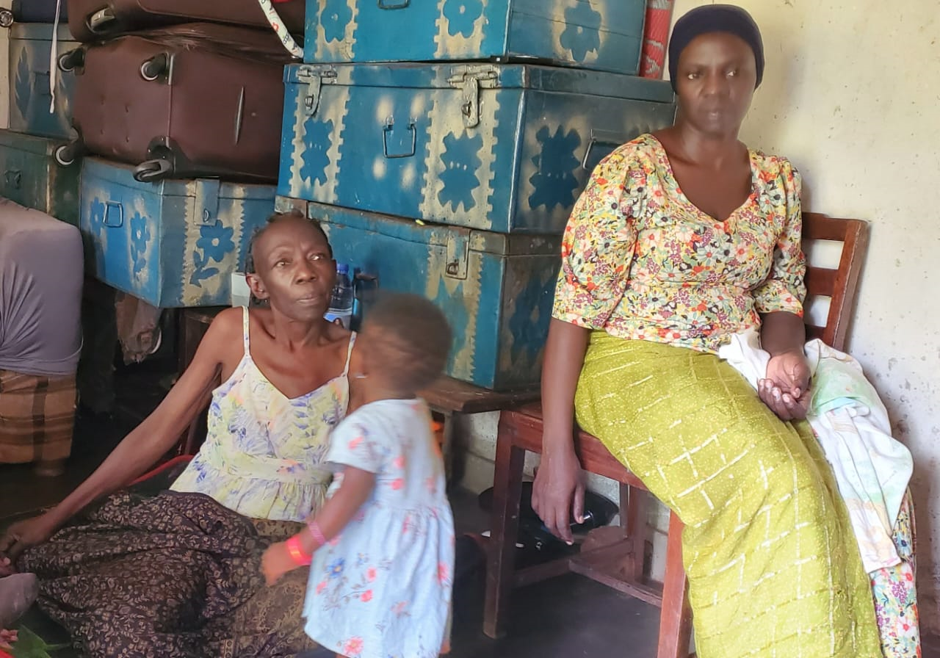
Across from her sits her daughter. Not long ago, she buried her husband after cancer. Now she is caring for her mother while raising a child who is not yet two.
After a moment, she asks,
“What if I am next?”
Silence followed.
Across these homes, palliative care arrives into lives already shaped by pressure. Work has stopped or narrowed. Income has shifted or disappeared. Roles are rearranged without planning. Care is negotiated alongside transport costs, distance, and the quiet mathematics of survival.
Joan moves through each visit in the same rhythm. Questions. Observations. Notes. Medication checks where needed. Small decisions, but precise ones.
Each stop is distinct.
Each return to the vehicle carries its own silence.
And there is always another name ahead.
Back at the hospice
By the time we return to Rays of Hope Hospice Jinja, the compound is still active.
Phones continue to ring. Staff move between offices. Vehicles that left earlier begin to return while others prepare to leave again.
The hospice does not settle into an “end of day.” It resets into another cycle.
Dr. Margrethe reflects on what this pattern demands.
“Many people assume palliative care begins when treatment ends,” she says. “But in reality, it begins when illness starts to affect daily life. And what we see is that the challenges are rarely only medical.”
The day’s visits make this visible without needing explanation. Sophia in a single room shared with her mother and child. The fisherman living between memory and the lake. The former truck driver negotiating dependence. A daughter caring for her mother while holding her own grief.
Different lives. Shared pressures.
This reality is not confined to Jinja. Across many communities, serious illness unfolds alongside distance to care, financial strain, and limited access to specialised services. Through partnerships with organisations such as Rays of Hope Hospice Jinja, the African Palliative Care Association supports efforts to expand services, strengthen health systems, and build workforce capacity to reach those who would otherwise remain out of reach. The intention is simple in principle: bring care closer to where people live. The practice is more complex.
Back at Sylvia’s desk, a phone rings again.
She answers.
The conversation begins.
Perhaps it is pain. Perhaps it is fear. Perhaps it is a family trying to understand what comes next.
No one knows yet.
What is certain is that someone will listen.
And tomorrow, the vehicles will leave again.


