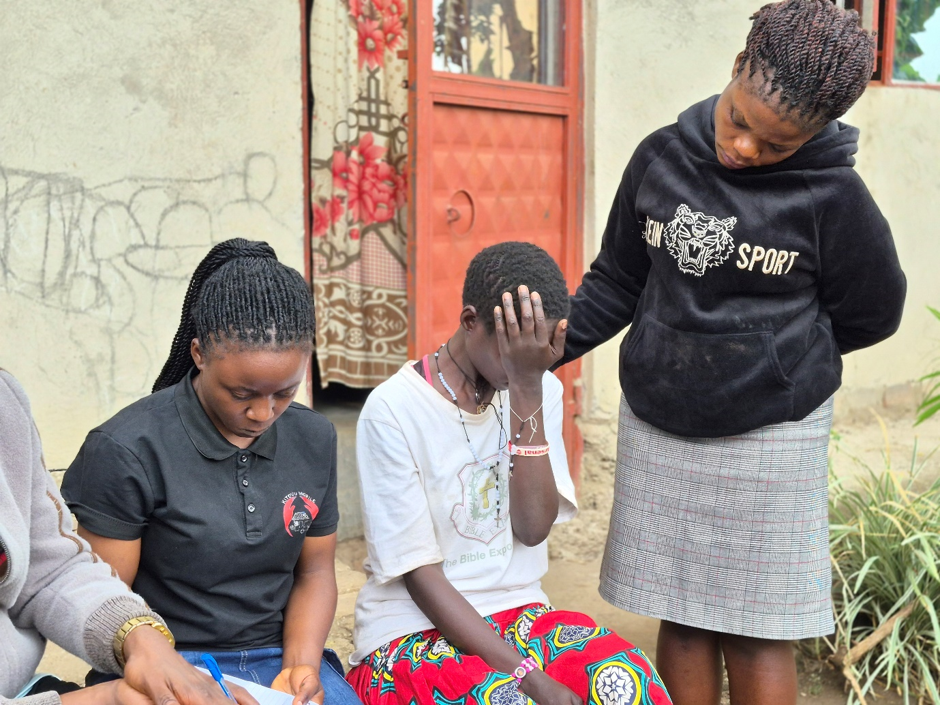
Margret being visited at her home in Masaka by Dr. Iddi Matovu, Juliet Birungi and Florence of the Gold Care team from Kitovu Mobile. Photo/Lokiru Samuel - APCA
Author: Lokiru Samuel-APCA
When cure is no longer the goal, can advance planning still change how we die?
When Margret talks about death, she does not speak about it as an abstract idea.
Living with a terminal illness in Masaka-Uganda, Margret can no longer move and spends much of her time lying in bed. But for her, the illness itself is no longer the greatest source of suffering. It is the emotional weight of living with a condition that has gradually taken so much from her.
There have been moments when Margret has questioned God.
There have been moments when she has wondered why her life has had to unfold this way.
And there have been moments when she has felt she had given up on life altogether.
“I asked God, other people die healthy, others fall sick and die shortly,” she says. “Why do you choose to make me suffer this long before death?”
During an interview, Margret cries briefly. She gathers herself and continues speaking.
The Gold Care team from Kitovu Mobile is beside her. Dr. Iddi Matovu and his colleagues do not hurry her. There is a gentle touch on her shoulder, someone listening, and counselling when the conversation becomes difficult.
Later, Margret explains the tears herself.
“It is not that I am unable to talk, it is just that sometimes when I think deeply about my situation, I cannot resist the tears.”
Kitovu Mobile has provided hospice and palliative care in the Greater Masaka region for decades, seeking to improve the comfort and quality of life of people living with serious illness. Its approach recognizes that suffering at the end of life is not always physical. It can involve the mind, relationships, spirituality, identity and the search for meaning.
Margret is one of the patients reached through the Gold Care Africa Programme.
And her experience raises a question that extends beyond her bedside:
What happens when medicine can no longer change the course of an illness, but there is still much that care can change?
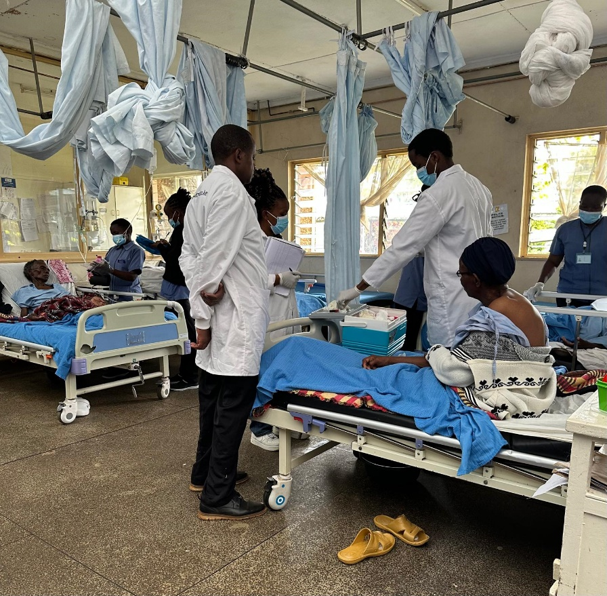
In East African hospitals, death is not unfamiliar. What can be difficult is recognizing early enough that a patient may be approaching the end of life and beginning a meaningful conversation about what comes next.
Sometimes, the first serious conversation happens when the patient is already deteriorating.
Then the decisions that might have been discussed weeks or months earlier suddenly have to be made in a matter of minutes.
Could it be done differently?
Dr. Ncuti Romain, a Family Medicine resident at Chogoria Hospital, remembers how little attention end-of-life care received during his earlier medical training.
“Gold Care has helped demystify death. For our cultures, we don’t talk about death-though it happens almost every day. We avoid any conversation around it. So now we are able to openly talk about it with families. As medical officers, we know palliative care exists, but so many courses don’t include it. Gold Care has added that missing part of my training, which is palliative care..”
The problem, then, may not be that healthcare workers do not care. They do care – but sometimes they are unsure what to do next.
They may simply not have been given the tools to recognise when the goals of care need to change-and how to guide patients and families through that transition, near the end of life. As Dr Ian Kibet, from Chogoria explained, “Some patients have been identified as end of life and may have been neglected and denied care. But I feel this Gold Care training is a solution to that…. because we’re looking at these patients differently and trying to find the best way that we can meet their needs – so it’s a solution to a problem that honestly exists in our setting.”
Most care for most people in the final year of life is given by frontline generalist workforce, supported when available by specialists in Palliative Care. But we know, they are over-stretched and very unlikely to be able to care for all people in their final years of life. Gold Care Africa https://www.gsfinternational.org.uk/goldcareafrica) is testing out in Africa a possible resolution of that gap, by enabling and empowering the frontline generalist care providers to become confident in this vital area.
The Gold Care programme is being piloted at Kitovu Mobile and St. Francis Hospital Naggalama in Uganda, and PCEA Chogoria Hospital in Kenya, in collaboration with the African Palliative Care Association (APCA).
At PCEA Chogoria Hospital, the pilot has provided specialised and basic training to at least 67 staff, including a Family Medicine consultant, five residents, three registered clinical officers, a nurse, social worker, chaplain, medical and clinical officer interns, and nurses. This training has translated into 498 Gold Care encounters, with an average of 23 patients identified each week, with Gold Care patients accounting for 32.5% of the combined ward population. Outside the hospital, 134 patients have been reached through community home visits, about 75% of whom are estimated to be in their last year of life.
Similarly, at Kitovu Mobile, 10 frontline healthcare workers have been trained and have so far reached 98 Gold Care patients.And at St Francis Hospital, most frontline staff on the 56 bedded general ward and 15 bedded palliative care wards have been trained in using Gold Care, affecting the care of most of their identified patients, known as ‘Gold patients’.
Gold Care Africa builds on the work of the Gold Standards Framework (GSF) approach, extensively used for over 25 years in the UK https://www.goldstandardsframework.org.uk/ It equips frontline healthcare workers to identify people approaching the last months , weeks, days of life earlier and provide proactive, person-centered and coordinated care .
This approach is transferable and is now being sensitively adapted for the African setting, supporting patients in their final year, with any condition, given by any care provider in any setting, generalist working closely with specialists to enable greater reach and impact on a larger number of dying patients.
The Gold Care Africa Programme is supported by the Andrew Rodger Trust https://www.gsfinternational.org.uk/andrew-rodger-trust-charity a small charity in England focussed explicitly on training and enabling the frontline workforce provide better end of life care in resource poor countries . See https://www.gsfinternational.org.uk/gsf-founders-story for more on the Founder’s Story and how this charity honours the memory of Andrew Rodger
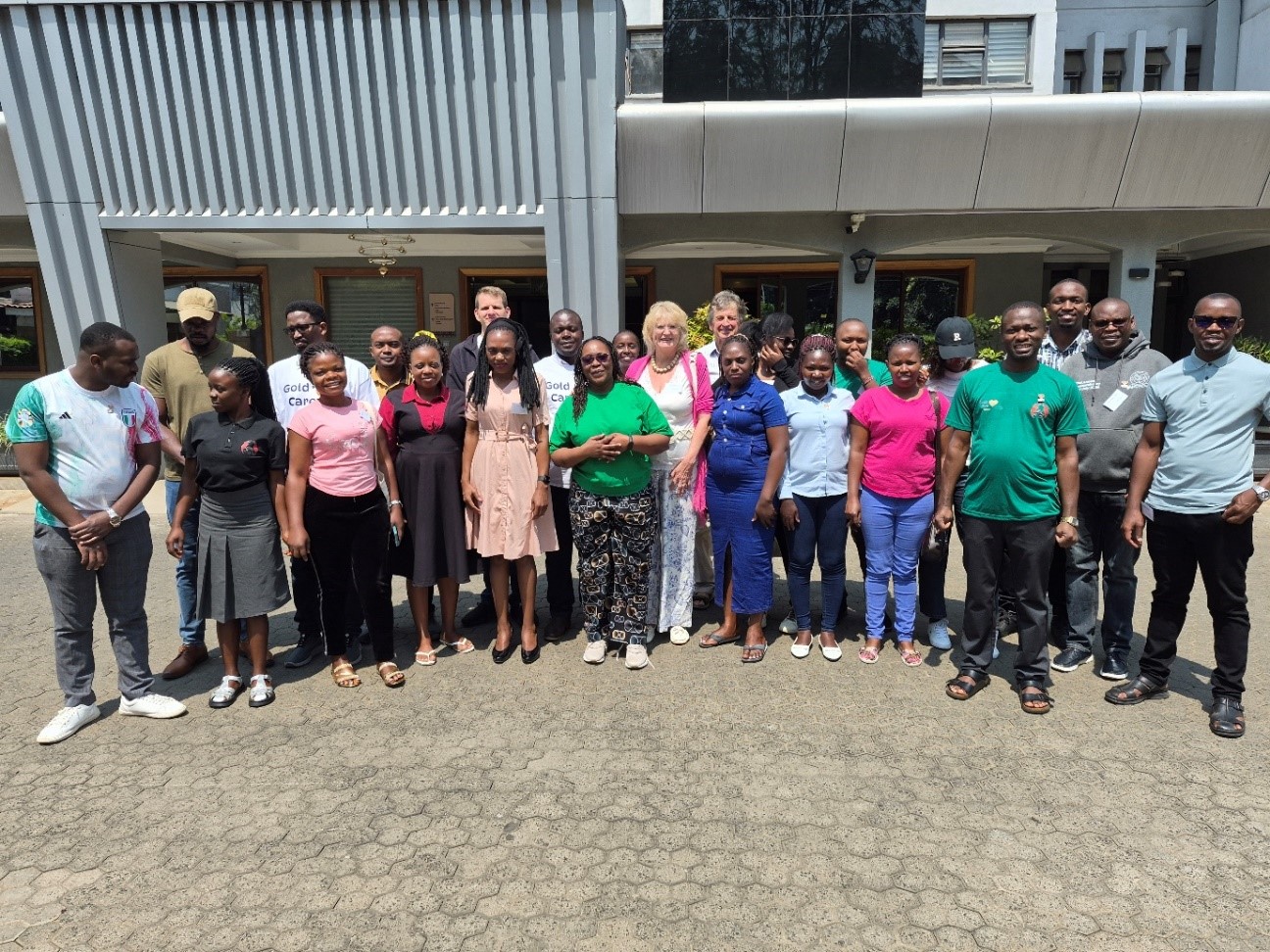
The programme runs over a year initially plus ongoing support, with all training, resources, evaluations available free, including a fully funded Symposium, the first of which was held in Nairobi in July, attended by 25, and a wonderful gathering it was.
The premise is: when conversations happen before a crisis, there is time to ask what the patient wants, help families understand what lies ahead and prepare for decisions that might otherwise be made under pressure.
For Dr. Ncuti, having a framework has made those conversations easier.
“Now we are able. We have standards, we know how to go about it. Now I think we openly talk about it with families.”
A shift from crisis to calm
Merrie Kendi, a Clinical Officer working in Chogoria's Male Medical Ward, describes the change in a way that needs little explanation.
“There’s been a shift from a point of crisis to a point of calm. I wasn’t aware before of the importance of offering proactive care as opposed to reactive and how this is able to impact patients’ lives”
Before that shift, a deteriorating patient could quickly become an emergency around which everyone had to react.
With earlier identification and planning, the same situation can begin differently: A clinician can sit down with a family. A patient can explain what matters to them. A family can understand what lies ahead.
Gold Care's advance care gives patients an opportunity to express their preferences before they become too ill to do so. It also gives healthcare workers a framework for responding when the patient's condition changes.
Sevume Geoffrey, a nurse at St. Francis Hospital Naggalama, remembers when these conversations were difficult for him.
“Sometimes we fear talking about death, planning for your future. But now I’m strong. I can discuss it with patients and even their families. I have confidence to talk about advance care planning.”
The change is not necessarily dramatic. Sometimes it is simply a clinician who knows when to start a difficult conversation. Sometimes it is a family that no longer hears about death for the first time in the middle of an emergency, but has time to reflect, consult together and prepare.And sometimes it is a patient being given the opportunity to say what matters most to them while they still can.
When the disease is not the only thing hurting
Margret’s story illustrates the parallel journey described in Gold Care
Her physical condition is serious. She cannot move and is confined to her bed. But treating only the physical illness would leave some of her deepest suffering untouched.
What happens when someone begins asking why God has allowed them to suffer? Or to question the meaning of continuing to live? These are not questions that can be answered by a prescription alone. For Margret, the Kitovu Mobile team listened. They provided counselling. They stayed with her through a moment when words gave way to tears.
Prof Keri Thomas, GSF UK founder and Gold Care Africa Lead, describes the importance of recognising the parallel journey of both the physical, bodily needs of our patients and the human, inner, spiritual needs of the person within that body.
And the ‘head, hands and heart’ approach we aspire to adopt in Gold Care. In bringing together this quality of clinical care (via our heads), along with the more practical routine pro-active care approach (via our hands), we recognise something special can be released in us as compassionate, loving and spiritual care (via our hearts), as we care for these dying people and as we grow into becoming ‘companions on the journey’.
We can have a great impact on the care of others and we ourselves can be deeply changed in the privilege of caring for people nearing the end of life. “And we can come to know that is the reason we have come” and affirms the reason we are doing this work.
A different kind of healthcare response
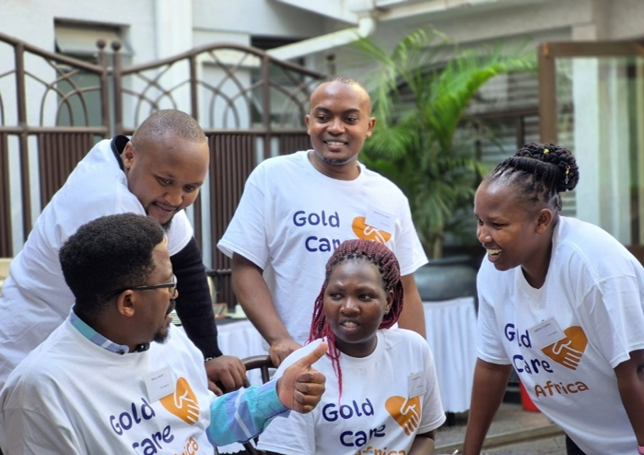
Across Sub-Saharan Africa, specialist palliative-care professionals remain too few to meet the needs of everyone approaching the end of life.
Most patients will encounter a generalist doctor, nurse or clinical officer long before they encounter a specialist.
That makes the skills of frontline healthcare workers critical.
Gold Care is built around this reality: rather than waiting for specialist services to reach every
patient, it seeks to equip the healthcare workers already caring for them touse their skills and expertise to provide
more proactive care, through earlier identification of patients in the final year of life,
more person-centred care, through advance care planning and family discussions
and better coordinated, to enable more to live well and die well where they’d choose to be.
Gold Care can help to release the talents of the generalist frontline workforce, supported where possible and appropriate by specialists, to enable many thousands more to have a good life and a good death.
For APCA Executive Director Dr. Eve Namisango, the experience is already demonstrating that such an approach can be developed within African health systems.
“After several months of hard work, and support by Keri, we are bringing on board Gold Care Africa, which is a holistic approach to providing quality end of life care for our patients. …And what this pilot has shown us is that it can actually be done in Africa, and our own people are doing it. We have people who are going to be ambassadors across Africa, and other people will be coming to learn from your sites.”
The question now is whether the lessons from these sites can be sustained long-term and translated into wider practice.
Because the challenge is bigger than a single programme
It is about how health systems understand care when curing is no longer the only goal
What kind of ending do we want for patients?
Margret 's story does not have a neat ending.
Her illness remains. She remains confined to her bed. The questions she has asked about God, suffering and death have not disappeared.
But neither has the care around her.
Perhaps that is the distinction that matters.
Palliative care does not promise to make every illness curable or everyday comfortable. It asks something more grounded: can suffering be reduced, dignity preserved, wishes heard, and people supported through the final chapter of their lives?
Gold Care is attempting to make that approach less dependent on chance.
For Charity Koki, a social worker working with the Chogoria’s community team, the responsibility extends beyond the hospital.
“One day you will not be there, but what are you going to leave behind for the people to understand? When you go back, spread that gospel of Gold Care to your people.”
There is a case here for investment-in training, community-based care, advance care planning and systems that enable frontline healthcare workers to provide compassionate care before a crisis arrives.
Because medicine may eventually run out of options.
Care shouldn't.
Phase 1 Follow up evaluation is due for Phase 1 end of this year with publication of findings and results
Phase 2 of Gold Care Africa supported by the Andrew Riodger Trust - applications open from Sept 26, interviews Feb 27 and begins March to end 2027-
For more information see the Gold care Webpage or contact admin@gsfinternational.org.uk
For more information about Phase 2 of Gold Care Africa – see information and flyer here https://www.gsfinternational.org.uk/goldcareafrica


